The Dodo Blog
Do you ever have moments of taking a glimpse at your felting table and thinking “OMG, look at all this plastic”? It’s happened to me often, so I’ve been trying to substitute it for other materials whenever I can. And I’ve also been thinking about writing a couple of tips for the felt makers who are ...
In 20 years of felt making I haven’t (yet!) had any issues with moths. It may just have been luck or because of the way I store my wool. It’s definitely not because I don’t have tons of wool in my studio 😊
Since I frequently get questions about how I store my wool, as well as how to prevent moth at...
"Filzen: Alte Tradition, Modernes Handwerk" (German version)
"Felt: New Directions for an Ancient Craft" (English version)
by Gunilla Paetau Sjöberg
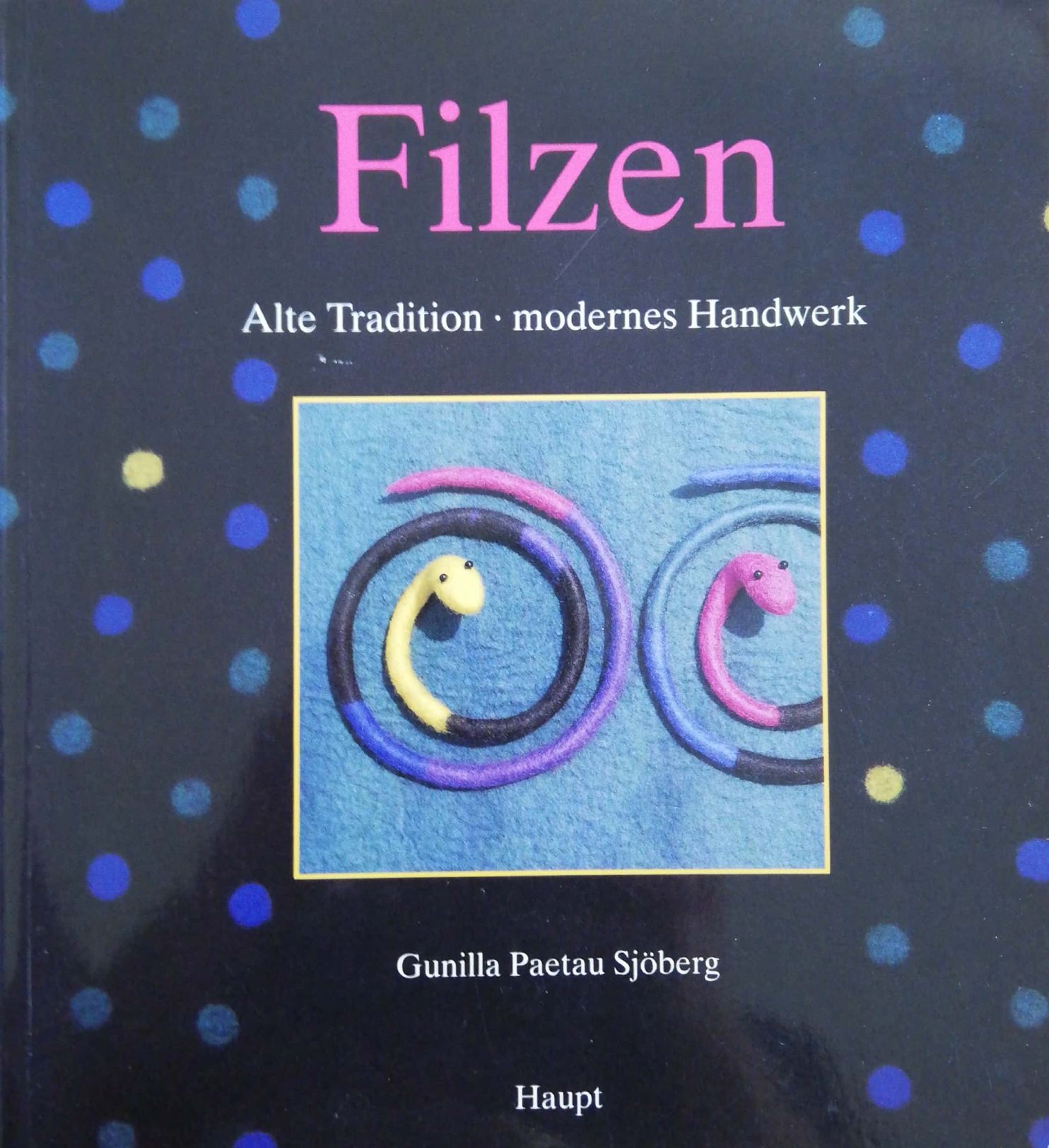
This might be the best book about wet felting I have. And I do have many 😊
It’s over 20 years old, it doesn’t have amazing photos and it has a l...
I’ve often been asked for tips on how to wet felt when you have health issues like back pain or arthritis.
Personally, I’ve also dealt with pain that was either caused or worsened by the strain I’ve put on my body due to wrong postures during wet felting.
It’s irrefutable that felting is a very ph...
Are you having issues getting your wet felted bowl to have a perfectly round shape? Or maybe you’ve felted a flat round piece, but, after fulling, it doesn’t look like a circle anymore? Your layout may be the cause of this distortion.
Wet felting doesn’t have many rules, so it allows for different ...
In the last couple of weeks, we’ve been looking at the topic of resists. But the focus was more on what you need to know at the beginning of your wet felting journey.
If, instead, you’re a more seasoned felt maker, you might be facing other issues, like what to do with the piles of resists and pape...
The video above goes into the following details:
How to felt with resists
When you felt with a resist, you need to lay out the wool on both sides to cover the resist completely. The wool layers need to then go beyond the resist edge, so that some of the wool can be turned over to the other side. ...
WHAT ARE RESISTS?
By definition, a resist is anything you use between two pieces of wool to prevent that they felt with each other. In other words, you need to use a resist when you want to make a hollow object.
Only after the flat piece is created can you shape it into a 3D object. So, if you wan...
Fiber paper is a material that you can create with either viscose or silk fiber (viscose paper or silk paper).
You can use it to cut out all sorts of shapes and apply them on wool to make felted pieces with a crisp design, much like what felt makers do with pre-felts.
It looks like actual paper, a...
We know that the amount of shrinkage in wet felting depends on many variables. Among the most important are:
- The wool type: breed, microns, fiber length. Fine wool shrinks more than coarser wool.
- The number of wool layers: if they’re odd or even, how many you lay. Also, thin layers shrink more t ...
Are you having issues making the edges of your felted projects straight and neat? I know, that’s one of the challenges for us felt makers.
Of course, it’s always possible to cut the felt and heal the edges. But it doesn’t look as nice.
Besides, sometimes, the reason why our felt doesn’t have neat ...
A good wool layout is essential for many reasons. It’ll give your work stability, and it’ll guarantee your felt is even. It’s also the secret to a fine drapable piece with a beautiful finishing.
Here’s a video showing you exactly how to create the perfect layout. If you don’t feel confident with th...